
The Danube: Four Countries, Countless Memories
- bucketsanddreamstr
- 1 day ago
- 2 min read

A river that changes its accent every day
Most rivers have a personality. The Danube has several, and it changes them constantly. Sail its length and you'll wake up in Austria, spend an afternoon in Slovakia, have dinner overlooking Hungary, and somewhere in between, realize you've lost count of how many languages you've heard in a single day.
That variety is really the Danube's defining feature. Where the Rhine rewards travellers with concentrated, repeating beauty — castle after castle, vineyard after vineyard — the Danube rewards them with constant reinvention. It touches four capital cities along a typical sailing: Vienna, Bratislava, Budapest, and often Belgrade, each with an entirely different architectural language, culinary tradition, and rhythm of daily life.
Vienna sets an elegant tone early — imperial palaces, world-class coffee houses, and a sense of grandeur that feels earned rather than performed. A short sail later, Bratislava offers something quieter and more compact, a capital small enough to fully explore in an afternoon, with a charm that comes from being slightly overlooked by travellers rushing between bigger names.
Then comes Budapest, and it's difficult to overstate the effect this city has on first-time visitors arriving by river. The Hungarian Parliament Building lit up along the water at night, Buda Castle rising on one bank and the grand boulevards of Pest stretching out on the other — it's one of the most striking approaches by water anywhere in Europe, and a river cruise delivers it in a way no train or flight ever could.
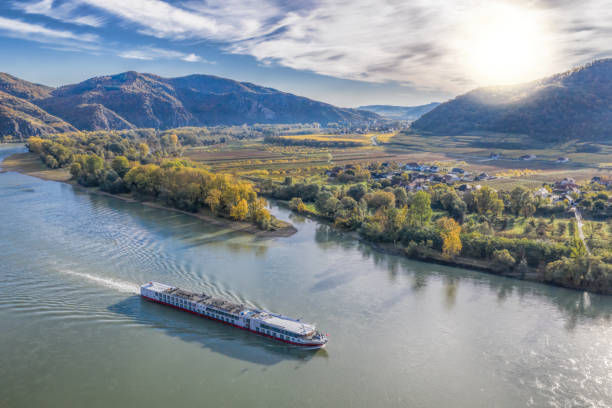
Beyond the capitals, the Danube carries its own quieter wonders. Near the Austrian town of Melk, a baroque abbey rises dramatically above the river on a rocky outcrop, visible for miles before the ship even arrives. Further along, the Danube narrows through the Iron Gate, a dramatic gorge between Serbia and Romania that ranks among the most striking natural landscapes on the entire river.
What ties all of this together is the sheer sense of motion — not just physical movement, but cultural movement. Few journeys let you feel the gradual shift from Western to Central to Eastern Europe as tangibly as a Danube sailing does, one capital, one language, one cuisine at a time. You don't arrive in a single place and stay there. You watch an entire region unfold, gently, one country at a time, without ever having to pack a bag in between.
✈️ Continue Your Travel Journey
Enjoyed today's article?
Every Monday we send our Buckets & Dreams Weekly Travel Brief—filled with exclusive travel inspiration, featured European journeys, planning tips, and travel ideas we don't share on social media.
Join our community of travel dreamers and never miss an edition. Sign up on our website today!

Comments